
_edited.png)

Event planning terms decoded for Oahu families


Planning a celebration on Oahu is exciting. But if you have ever read through a vendor contract and felt lost halfway through, you are not alone. Terms like RFP, MWR, bundled rental, and load-in time can make a straightforward birthday or graduation feel more complicated than it needs to be. For military families stationed here, the challenge is even greater because you are juggling civilian vendor language alongside base-specific terminology. This guide breaks it all down in plain, simple language so you can plan with confidence, communicate clearly, and create an event your guests will remember.
Table of Contents
Key Takeaways
Point | Details |
Local terminology matters | Knowing Oahu- and military-specific terms prevents costly confusion and improves event results. |
MWR for military families | Military events involve unique language around Morale, Welfare, Recreation; learn these terms for smooth planning. |
Entertainment jargon clarified | Understanding words like DJ, photobooth, vendor saves time, helps you book the right services, and crafts better celebrations. |
Roles define responsibilities | Clear roles and job titles in event planning ensure smooth teamwork and communication. |
Practical application | Applying this guide’s terminology empowers families and planners to create memorable Oahu events. |
Why terminology matters for Oahu and military events
Words carry real weight in event planning. When you misunderstand a term on a contract, you might end up paying for services you did not expect or missing out on services you assumed were included. For families and planners on Oahu, where events range from backyard luaus to large military community gatherings, that confusion can cost you time and money.
One of the most common examples we hear from clients: someone books a “DJ package” assuming it includes lighting, then shows up to the event and realizes the room is dark. Or they book a venue that claims to offer “in-house entertainment” without understanding that the venue just has a speaker system, not an actual entertainer. These are not small details. They shape the entire experience.
For military families, there is an added layer. The family entertainment guide for Hawaii covers many local specifics, but military life brings its own vocabulary. MWR programs stand for Morale, Welfare, and Recreation, providing leisure programs, facilities, and entertainment on bases. Knowing what MWR offers and how to work with it is key for any military family planning an event on or near a base.
Here are a few reasons why terminology matters so much for Oahu events:
Vendor contracts use legal and industry terms that can be misread without context.
Military event coordinators use acronyms civilians may not recognize, which slows planning down.
Local Oahu vendors sometimes use terms specific to Hawaii culture or island logistics.
Miscommunication between clients and vendors is one of the top reasons events run over budget or timeline.
For ideas on how terminology plays out in real settings, check out how school event entertainment gets organized for Oahu campuses.
“If you do not understand the language, you cannot ask the right questions. And if you cannot ask the right questions, you will not get the event you planned for.”
Top event planning terms every Oahu planner should know
Now that we have covered why terminology matters, let us break down the most important terms you need to know. These apply whether you are planning a birthday party in Kapolei, a graduation in Kailua, or a military family night on base.
Term | Definition | Used In |
RFP | Request for Proposal: a document asking vendors to submit pricing and service details | Corporate, military, school events |
Vendor | Any company or individual hired to provide a service at your event | All event types |
Logistics | The planning of how people, equipment, and services get to and from your event | All event types |
MWR | Morale, Welfare, and Recreation: military base leisure and entertainment programs | Military events |
Load-in | The time when vendors arrive and set up equipment before guests arrive | All event types |
Rider | A list of technical or personal requirements a performer or vendor submits before the event | Entertainment events |
Entertainment package | A bundled set of services (e.g., DJ plus lighting plus photobooth) offered at a set price | Birthday, wedding, corporate |
Emcee | Master of ceremonies; the person who hosts and guides the event program | Weddings, graduations, galas |
Understanding an RFP is especially valuable for larger events. When you send out an RFP, you are essentially asking vendors to compete for your business by submitting detailed proposals. This gives you a clear comparison of pricing, availability, and what is included. For military events, MWR coordinators regularly use RFPs to source civilian vendors for base activities.
Pro Tip: Always ask vendors to itemize what is included in their proposal. Vague language like “event support” can mean very different things depending on the company.
The term rider surprises many first-time planners. A DJ’s rider, for example, might specify the type of power outlet they need, how much space is required for their setup, or even a request for water on stage. Reviewing a vendor’s rider before signing anything helps you avoid last-minute surprises on the day of your event.
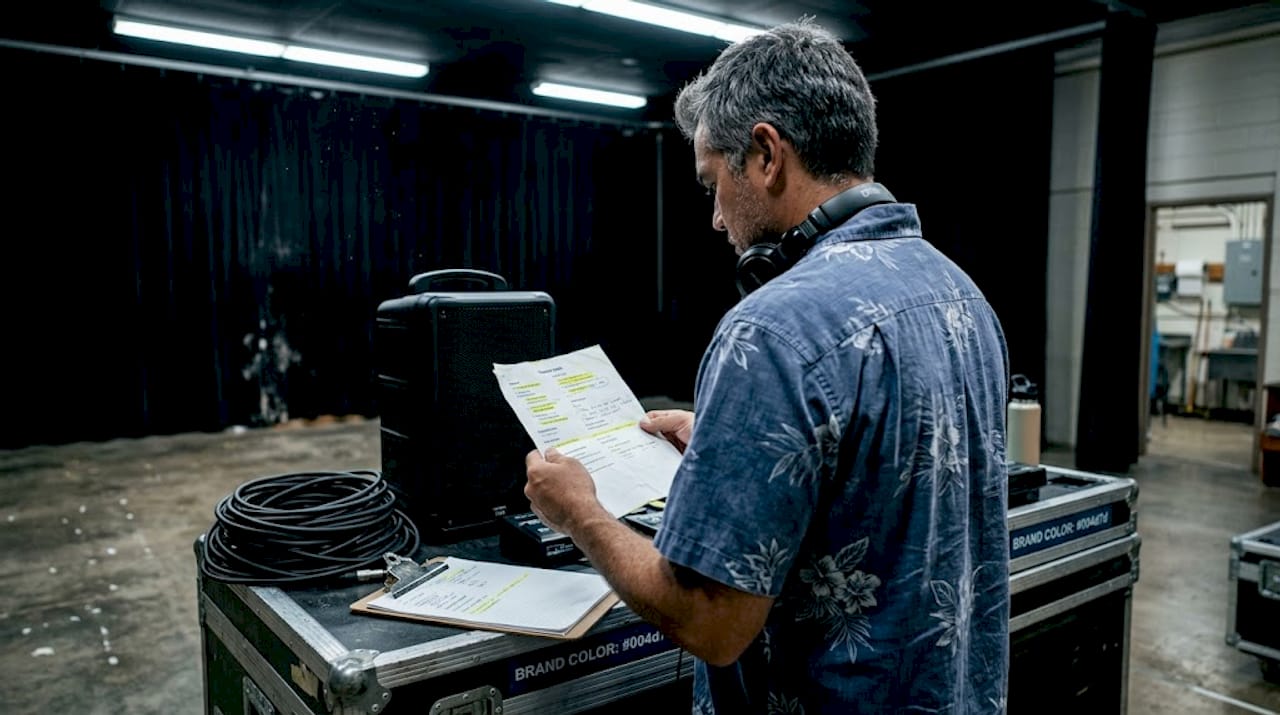
Our sound system guide explains the technical requirements you might encounter, and our post on event lighting explained covers what lighting terms mean in a real event context. You can also browse our party rental gallery to see how different setups look in practice.
Key terms to memorize before your next vendor call:
Day-of coordinator: A person hired to manage the event timeline on the actual day, separate from your planner.
Strike: Industry term for teardown after the event ends.
Deposit: The upfront payment (usually 25 to 50 percent) that secures your booking.
Exclusivity clause: A contract term that prevents a vendor from working with competing events on the same date.
Navigating entertainment services: Oahu and military context
With basic terminology defined, let us apply that knowledge to booking and coordinating entertainment services for your event. Entertainment is often the biggest source of confusion because it covers so many different service types.
Here is a quick comparison of entertainment service types you will encounter on Oahu:
Service Type | What it Includes | Best For |
DJ with sound and lighting | Music, speakers, mixers, dance floor lights | Weddings, birthdays, school events |
AI-powered photobooth | Instant prints, digital sharing, custom overlays | All celebration types |
Karaoke setup | Microphones, song library, display screen | Family nights, parties |
Outdoor movie setup | Inflatable screen, projector, audio system | Backyard events, community nights |
Bundled entertainment package | Multiple services at a combined rate | Larger events needing multiple options |
For military families, MWR programs often offer entertainment options at reduced or no cost for service members and their families. However, MWR facilities may have specific rules around outside vendors, equipment approvals, and setup times. If you want to bring in a civilian DJ or photobooth company, you may need to submit paperwork in advance and confirm the vendor meets base access requirements.
Four booking steps every Oahu family planner should follow:
Confirm venue rules first. Whether it is a base facility or a park in Ko Olina, know what is allowed before contacting vendors.
Get everything in writing. Verbal agreements do not protect you if a vendor cancels or changes scope.
Ask about load-in time. Many venues have strict windows for vendor setup, and your entertainment company needs to know this upfront.
Clarify what “bundled” means. A bundled package at one company might include very different items than a bundle from another.
The concept of bundled rentals vs. vendors is worth understanding before you start comparing prices. Bundling multiple entertainment services with one provider simplifies coordination and often saves money. But you need to confirm exactly what is and is not in the bundle.
Pro Tip: Ask for a detailed setup timeline from every entertainment vendor you consider. If they cannot provide one, that is a red flag for reliability.
The event management checklist from entertainment industry professionals recommends always clarifying who is responsible for sound checks, equipment failures, and last-minute changes before the event date. That kind of clarity is what separates smooth events from stressful ones.
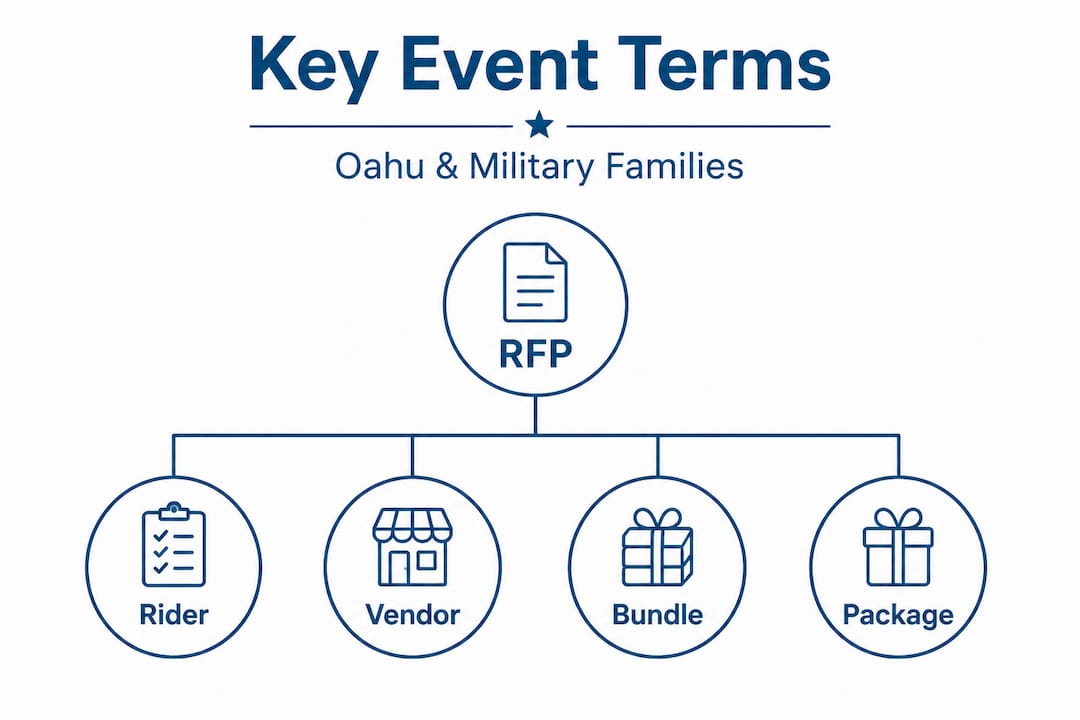
Our post on custom event packages shows how you can mix and match services to fit your exact budget and vision.
Clarifying roles and responsibilities in event planning
Understanding entertainment-specific terms is only half the picture. Knowing who does what completes it. One of the most common sources of confusion in event planning is unclear roles. Who makes decisions on the day of the event? Who do vendors call if something goes wrong?
Here is a breakdown of common roles you will encounter when planning an Oahu event:
Client: That is you. The person or family hiring vendors and making final decisions.
Event coordinator: Oversees the overall plan, timeline, and communication between all parties.
Entertainment manager: Specifically handles all entertainment-related bookings and logistics.
Vendor: Any hired service provider, from caterers to DJs to photographers.
Day-of coordinator: Manages the event in real time so the client can relax and enjoy it.
Emcee: Keeps guests informed and engaged throughout the program.
In civilian settings, these roles are often filled by different people or companies. In military contexts, MWR coordinators often handle multiple roles at once because MWR programs are designed as full-service leisure providers. That means one MWR staff member might handle the venue booking, entertainment approval, and day-of logistics all at the same time. Understanding that structure helps civilian vendors work more smoothly within the military environment.
“The clearest events are the ones where every person knows their role before the first guest arrives.”
For a real-world example of how roles play out in a complex event, our wedding package example shows how different vendors coordinate around a timeline. Our post on hotel event entertainment also covers how venue staff roles interact with outside entertainment vendors.
If you are working with multiple vendors, always designate a single point of contact for each vendor to reach on the day of the event. This prevents conflicting instructions and reduces delays. The cancellation strategies guide from entertainment booking professionals highlights role clarity as one of the top factors in handling last-minute changes without chaos.
What most event planners miss about terminology
Here is something we have learned from planning and supporting events across Oahu: most people think terminology is just vocabulary. It is not. Terminology is the foundation of trust between you and every vendor or coordinator you work with.
When you walk into a vendor meeting and confidently use terms like “RFP,” “rider,” and “load-in window,” something shifts. Vendors take you more seriously. They give you more detailed answers. They know you will hold them accountable. That confidence comes from knowledge, and knowledge comes from learning the language.
The flip side is also true. When families and planners are not familiar with event terms, vendors sometimes use that gap to their advantage. Vague contract language, undefined service scopes, and hidden fees all hide behind confusing terminology. We have seen it happen, and it is frustrating for families who thought they were getting one thing and received something completely different.
For military families especially, this knowledge is power. Base events often involve multiple layers of approval, and knowing how MWR language works puts you in a position to navigate that process faster and more effectively. You can check out party entertainment wisdom for more insight on how entertainment choices connect to event outcomes.
The other thing most planners miss: terminology evolves locally. What a DJ on the mainland calls a “uplighting package” might be described differently by a Kapolei-based vendor. What MWR calls an “authorized contractor” means something very specific on base. Staying current with local terminology is not just smart. It is necessary for getting the right results.
Our honest take: invest thirty minutes learning the key terms before your first vendor call. You will ask better questions, avoid misunderstandings, and feel far more in control of your celebration.
Connect with trusted entertainment for your next Oahu event
If you are ready to put your new event planning skills into action, Terriffics Entertainment is here to make it easy. We are based in Kapolei and serve the entire island of Oahu with DJ sound and lighting, an AI-powered photobooth, karaoke, and outdoor movie setups. We speak your language, whether you are a military family coordinating with MWR or a local planner building a birthday celebration from scratch.
We offer flexible, mix-and-match packages designed around your event type, budget, and vision. Fast setup, professional service, and a friendly team that keeps things fun from start to finish. Browse our party rentals gallery to see what your event could look like, then reach out for a custom quote. We are ready to help you create a celebration that feels effortless and unforgettable.
Frequently asked questions
What does MWR mean in event planning for military families?
MWR stands for Morale, Welfare, and Recreation, a program that provides leisure activities, facilities, and entertainment specifically for military service members and their families on base.
How is event planning terminology different for Oahu or Hawaii events?
Oahu events often involve local venue rules, island logistics, and cultural practices that shape how terms are used. Military families planning on-base events also need to understand MWR-specific language that civilian planners may not recognize.
Which terms should I know when booking a DJ or photobooth?
Start with key terms like vendor, rider, bundled rental, RFP, and entertainment package. These will help you communicate your needs clearly and compare proposals accurately across different service providers.
Why is understanding event planning terminology important?
Knowing the right terms prevents costly misunderstandings with vendors, helps you read contracts more clearly, and gives you the confidence to make decisions that keep your celebration on track and on budget.
Recommended
Comments