
_edited.png)

Hawaiian Wedding Songs: Processional to Recessional + Handoff Plan

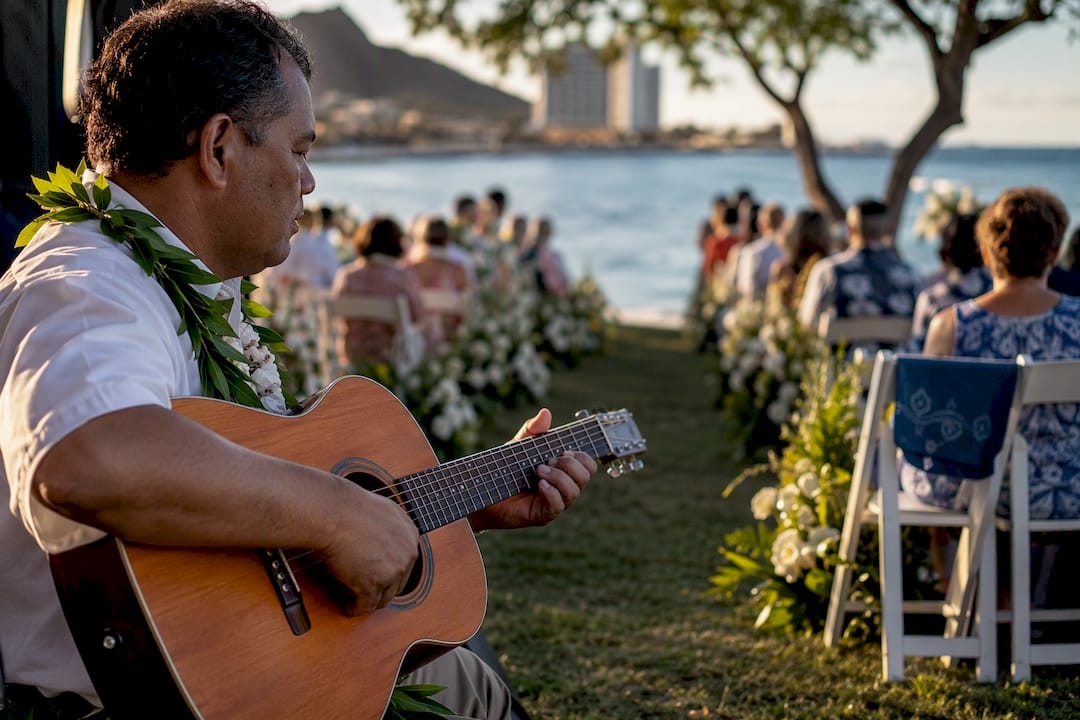
Ke Kali Nei Au, better known as “The Hawaiian Wedding Song,” is the canonical choice for couples planning an island-style ceremony, and Andy Williams’ English adaptation is still the most recognized version in the U.S. This guide gives you ready-to-use playlists for the ceremony, reception, and slideshow, plus placement tips so every song lands at the right moment. We built it with help from Terrifficsentertainment’s own event experience on Oahu.
TL;DR:
Using the traditional Hawaiian vocal version of Ke Kali Nei Au emphasizes cultural authenticity, while the Andy Williams adaptation offers familiarity for American guests.
For outdoor ceremonies, consider a slack-key guitar or ukulele instrumental to avoid vocal clashes with vows or speeches.
Match song types to wedding moments: slow processional pieces at a soft volume, mid-tempo or upbeat tracks for dancing, and instrumentals for photo slideshows.
Shorten and crossfade instrumental tracks for slideshows longer than three minutes to maintain pacing and avoid awkward pauses.
Coordinate with vendors to ensure smooth transitions between live musicians and recorded music, especially at outdoor venues with wind or ambient noise.
Table of Contents
Hawaiian Wedding Songs Playlists for Ceremony, Reception, and Slideshow
Building a full set of wedding slideshow songs from scratch takes hours. Start with these curated lists instead, then swap in personal favorites where they fit.
Ceremony (processional to recessional):
“Ke Kali Nei Au” — Hawaiian original, processional
“Ke Kali Nei Au” (Andy Williams adaptation) — English version, processional or seating
“Hawaiian Wedding Song” — Twila Paris, gentle instrumental option
“Kawaipunahele” — Keali’i Reichel, signing/unity moment
“Ka Nohona Pili Kai” — slack-key, seating or prelude
“Aloha 'Oe” — traditional, recessional or farewell moment
“Better Together” — Jack Johnson, modern recessional pick
“Somewhere Over the Rainbow / What a Wonderful World” — Israel Kamakawiwoʻole, unity or reading
“Hi’ilawe” — traditional slack-key, prelude
“Pua Lililehua” — instrumental, guest seating
“Ku’u Pua I Paoakalani” — traditional, prelude
“To You Sweetheart, Aloha” (Harry Owens) — closing farewell or last dance of the ceremony program
Reception (grouped by energy):
Upbeat: “Twist and Shout” (Kalapana), “Slippers (Loose Rubbah Slippah)” (Frisco Kealoha)
Mid-tempo: “Country Comfort,” “E Ku’u Morning Dew” (Dennis Kamakahi)
Mellow island-modern: “Better Together” (Jack Johnson), “Banana Pancakes” (Jack Johnson), “Kolonahe” (Keali’i Reichel)
Slideshow-friendly tracks:
“Ke Kali Nei Au” (instrumental slack-key version), moderate tempo, edit at the second chorus
“Kolonahe” (Keali’i Reichel), slow build, works well for a long photo montage
“Waimanalo Blues” (instrumental cover), steady tempo throughout, easy to loop
Which Hawaiian Wedding Song Recording Should You Choose?
Ke Kali Nei Au was written by Charles E. King around 1925 to 1926, originally as a Hawaiian-language piece. Andy Williams’ 1958 English adaptation reached number 11 on the Billboard Hot 100, which is why most American guests recognize the melody even if they’ve never heard the original lyrics.
Which version fits your ceremony:
Traditional Hawaiian vocal (native speaker or Hawaiian choir): best for couples prioritizing cultural authenticity
Slack-key guitar instrumental: works for outdoor ceremonies where you want mood without lyrics competing with vows
Ukulele arrangement: casual, intimate ceremonies or cocktail hour
Orchestral pop (Andy Williams style): cinematic feel, strong for recessionals or slideshow use
Playing the original Hawaiian-language version during the ceremony carries more cultural weight than the English adaptation alone. If authenticity matters to you, book a Hawaiian performer or source a high-quality native-language recording rather than defaulting to the pop version.
How to Place Hawaiian Music Through Your Ceremony and Reception
Different sub-genres serve different moments, and matching them correctly keeps the day flowing instead of feeling mismatched.
Processional: traditional chant or hapa-haole ballad, slow tempo, played at a soft volume so guests can hear footsteps and cues
Cocktail hour: slack-key or ukulele instrumentals, background level, no vocals competing with conversation
Reception dinner: hapa-haole and mid-tempo island songs, moderate volume
Dancing: slack-key transitions into island-reggae and upbeat contemporary tracks
Give your DJ or band a short brief: which songs are non-negotiable (like your processional pick), where fades should start, and any moment that needs a hard cue, such as a first dance. Three red flags to avoid: songs with abrupt tempo shifts mid-track, vocal-heavy tracks during vow readings, and unfamiliar songs with no rehearsal run-through.
Pro Tip: If you’re using live musicians for the ceremony but recorded tracks for the reception, ask your entertainment provider to test the handoff during setup. A dead-air gap between a live guitarist and a DJ’s first track is one of the most common timing mistakes at outdoor weddings.
Song Picks by Wedding Moment
Assembling bride and groom slideshow songs and ceremony music separately can eat up planning time. Use this shortlist to move faster.
Processional: Ke Kali Nei Au (Hawaiian-language version first choice; Andy Williams version for guests who want the familiar melody)
Signing/unity moment: “Kawaipunahele” (Keali’i Reichel), warm tempo, works well as an instrumental excerpt
First dance: “Better Together” (Jack Johnson), mid-tempo, full track recommended rather than edited
Recessional: “Aloha 'Oe” for a traditional farewell, or “Twist and Shout” (Kalapana) for an upbeat exit
Cocktail hour: slack-key instrumentals, looped as background, no need for a set structure
Closing send-off: “To You Sweetheart, Aloha” (Harry Owens), better as a shortened instrumental excerpt than the full vocal version for a quick final moment
Note that a few of these, especially “Kawaipunahele” and “To You Sweetheart, Aloha,” work best trimmed rather than played in full. Long instrumental intros can drag during a live moment where guests are watching the couple, not listening to a solo.
Editing Hawaiian Music for Slideshows and Wedding Videos
Wedding slideshow length and pacing depend almost entirely on the song you pick, so choose before you start editing photos, not after.
Match tempo to transition speed: faster cuts need a steadier, more rhythmic track; slower fades pair with ballads
Pick instrumental or stripped arrangements so vocals don’t compete with narration or dialogue clips
Trim to the chorus rather than playing a full track, and use crossfades between photo groups for a smoother feel, a technique The Knot recommends for cleaner pacing
Map 3 to 5 photos per chorus and 1 to 2 per verse to keep the montage feeling intentional rather than random
Three instrumental covers that hold up well on video: a slack-key version of “Ke Kali Nei Au,” an instrumental “Kolonahe,” and a fingerstyle guitar cover of “Aloha 'Oe.”
Pro Tip: Choose a song with a steady, unchanging tempo for slideshows longer than three minutes. A track that speeds up or slows down mid-song forces you to either cut photos awkwardly or stretch the montage past a comfortable length.
Terrifficsentertainment’s Checklist for Hawaiian Music Moments
Getting the sound right at an outdoor Hawaiian-themed wedding takes more planning than an indoor reception, and we’ve built our setup process around exactly that.
Choose live musicians for the ceremony when budget allows; recorded tracks work fine for cocktail hour and reception
Coordinate song cues across DJ, photobooth, and karaoke setups so transitions don’t create dead air
Confirm venue load-in times, PA placement, and monitor needs before the wedding day, especially for beach ceremonies where wind can swallow soft vocals
Ask any vendor how they handle handoffs between live and recorded segments
If you’re vetting a DJ for these transitions, our DJ selection checklist covers the exact questions to ask.
What the Lyrics of Ke Kali Nei Au Actually Mean
Ke Kali Nei Au translates roughly to “I am waiting here,” and the lyrics describe a lover waiting faithfully near the sea for their partner to return. That imagery, waiting by the shore, watching for a returning canoe, makes it a natural fit for a ceremony built around commitment and patience.
The Hawaiian lyrics reference specific natural elements: gentle rain, ocean breezes, and the shoreline itself, all common motifs in traditional Hawaiian love songs. Huapala’s lyric archive preserves transcriptions of songs like this one, which is worth checking if you want an accurate Hawaiian-language version rather than a simplified English paraphrase.

Andy Williams’ English adaptation shifts the tone slightly, framing the song as a direct promise (“I will love you longer than forever”) rather than the original’s quieter, more patient waiting imagery. Neither version is wrong. They just carry different emotional weight. Couples who want the literal meaning of the vows they’re walking down the aisle to should look up a direct translation before choosing between the Hawaiian original and the English pop version. It changes what the moment actually says, even if the melody is identical.
If lyrics matter to you beyond Ke Kali Nei Au, check translations for songs like “Kawaipunahele” (about longing for a loved one) or “Aloha 'Oe” (a farewell song, appropriate but bittersweet for a recessional) before locking them into your set.
Contemporary Hawaiian Artists Worth Adding to Your Set
Modern Hawaiian and island-influenced songs give your reception a different texture than traditional chant or slack-key, and several have become genuine wedding staples over the past two decades.
Jack Johnson’s “Better Together” is probably the most requested modern song in this category, and for good reason. Its acoustic, unhurried feel matches the relaxed tone many couples want for a first dance or reception moment. Editorial lists of romantic Hawaiian songs consistently pair it alongside Ke Kali Nei Au as a modern counterpart to the traditional standard.
Israel Kamakawiwoʻole remains the most influential contemporary Hawaiian voice for weddings, largely through his ukulele medley of “Somewhere Over the Rainbow” and “What a Wonderful World.” It works for readings, unity moments, or a quiet instrumental backdrop during photos.
Keali’i Reichel’s catalog, especially “Kawaipunahele” and “Kolonahe,” bridges traditional Hawaiian songwriting with a more contemporary acoustic arrangement, which makes his music flexible enough for both ceremony and reception use. Dennis Kamakahi’s slack-key work, particularly “E Ku’u Morning Dew,” gives you an instrumental option with real musical pedigree if you want something recognizable to Hawaiian music fans without vocals competing during dinner conversation.
Hiring Live Hawaiian Musicians for Your Wedding
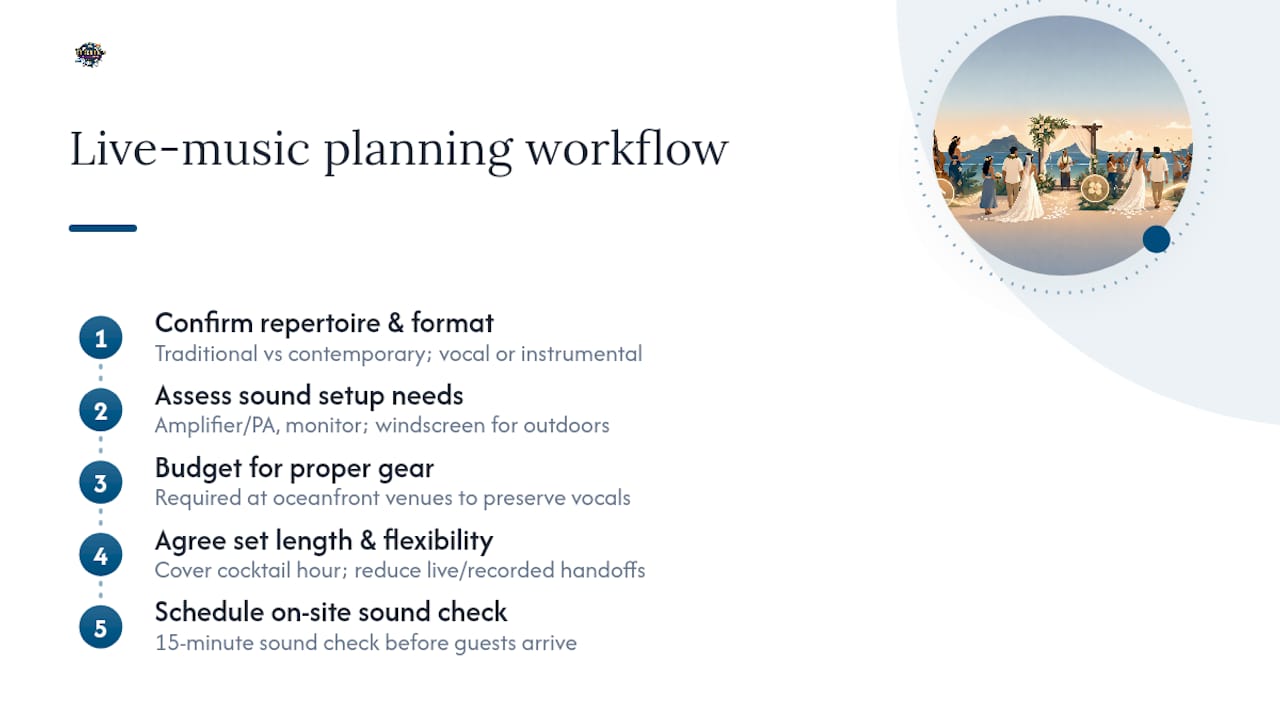
Booking live performers changes the feel of a ceremony in ways a playlist can’t replicate, but it requires planning further ahead than picking recorded tracks.
Start by confirming whether the musician performs traditional Hawaiian repertoire, contemporary island music, or both. Some slack-key specialists focus entirely on instrumental sets and won’t sing Ke Kali Nei Au’s lyrics, which matters if you specifically want the vocal version during your processional.
Ask about their sound setup needs early. A solo guitarist at an outdoor beach ceremony needs a small amplifier and possibly a windscreen on any microphone; a duo with vocals needs a basic PA and monitor. Wind and ambient noise swallow soft acoustic vocals faster than most couples expect, so budgeting for proper sound gear is not optional at oceanfront venues.
Confirm set length and repertoire flexibility during booking. Many Hawaiian musicians can play through cocktail hour and into early reception, which reduces the handoff points between live and recorded music. Fewer handoffs mean fewer chances for an awkward silence. Finally, ask for a short rehearsal or sound check window before guests arrive. Fifteen minutes of testing on-site prevents most of the audio issues that show up during the actual ceremony.
Respecting Tradition Without Losing Your Guests
We’d rather see couples choose the Hawaiian-language Ke Kali Nei Au for the ceremony itself and save the English adaptation, or something like Jack Johnson, for the reception. Blend traditional pieces with modern island arrangements rather than picking one lane. If cultural authenticity matters to you, a quick conversation with a Hawaiian musician about song choice goes a long way.
— Terriffics
How Terrifficsentertainment Handles Hawaiian Music Logistics
Picking the right songs is half the job. Getting them to play cleanly, on cue, at the right volume, without a dead gap between your processional track and your reception playlist, is the other half. Terrifficsentertainment handles DJ sound and lighting setup across Oahu, and we build song transitions into the timeline instead of leaving them to chance on the wedding day.
Our DJ and sound packages coordinate directly with photobooth and karaoke rentals, so your Ke Kali Nei Au processional, first dance, and late-night karaoke set all run through one connected system instead of three separate vendors guessing at cues. If your reception includes a photo moment, our photobooth rental pairs naturally with the music timeline, and our karaoke rental keeps the energy going once dinner wraps. For general reception planning, our Oahu reception music guide covers flow beyond just the songs themselves. Check our availability for your date and get a quote built around your specific ceremony and reception timeline.
Sources
The historical detail on Ke Kali Nei Au, including its 1925 to 1926 composition by Charles E. King and Andy Williams’ chart performance, comes from the Hawaiian Wedding Song Wikipedia entry, which draws on documented chart data and composer records.
Curated song selections, including the pairing of Ke Kali Nei Au with contemporary picks like Jack Johnson’s “Better Together,” reference Hawaiʻi Magazine’s editorial list of romantic Hawaiian songs. Slideshow editing guidance, including trimming to the chorus and using crossfades, comes from The Knot’s slideshow guide and pacing advice from Brides. Lyric transcriptions and authenticity checks for Hawaiian-language songs referenced Huapala’s archive. For general DJ coordination technique beyond Hawaiian repertoire, Porcci NYC’s DJ tips offer useful context on cueing and transitions.
Recommended
Comments