
_edited.png)

The Purpose of Event Customization for Every Occasion


Event customization is the process of tailoring every element of a gathering to match the specific preferences, needs, and expectations of the people attending. The purpose of event customization goes far beyond picking a color scheme or choosing a menu. It applies psychological principles of recognition and belonging to make each guest feel genuinely valued. Research confirms that personalized interactions create stronger brand loyalty by anchoring experiences in long-term memory. Whether you are planning a birthday party in Kapolei or a corporate summit downtown, tailored events consistently outperform generic ones on every measure that matters.
What is the purpose of event customization?
Event customization, also called event personalization, is the deliberate shaping of an attendee’s experience based on who they are and what they care about. The goal is not decoration. The goal is connection.
The brain categorizes unique, personalized experiences as significant events worth storing in long-term memory. That neurological response benefits the host directly. Guests leave with a stronger emotional association to the brand, the host, or the occasion itself. That association drives repeat attendance, positive word-of-mouth, and loyalty that generic events simply cannot produce.
Recognition is the core mechanism at work. When a guest sees their name on a welcome sign, receives a food option that fits their diet, or gets a session recommendation that matches their interests, social anxiety drops and openness rises. That shift changes how people interact, how long they stay, and how positively they remember the event. Personalization is not a luxury add-on. It is the engine of attendee engagement.
How does event customization improve attendee engagement and satisfaction?
Engagement rises when attendees feel seen. Customizing events significantly improves satisfaction by triggering recognition, which lowers social anxiety and increases openness to participation. That is a measurable psychological shift, not a soft benefit.
“Personalized interactions create stronger brand loyalty and positive emotional associations by anchoring experiences in long-term memory.” — Event personalization research
The data from corporate events is especially clear. 84% of business events now treat personalization as critical to success, and budgets are increasing accordingly. That figure reflects a broad industry consensus: generic programming no longer meets attendee expectations.
Emotional memory plays a direct role in satisfaction scores. When an event feels designed for you specifically, the experience registers as meaningful rather than routine. Meaningful experiences generate positive reviews, referrals, and a genuine desire to return. For event planners, that translates into better lead quality, stronger brand equity, and higher return on experience. Personalization is not just a guest benefit. It is a business outcome.
What are the different levels of event customization?
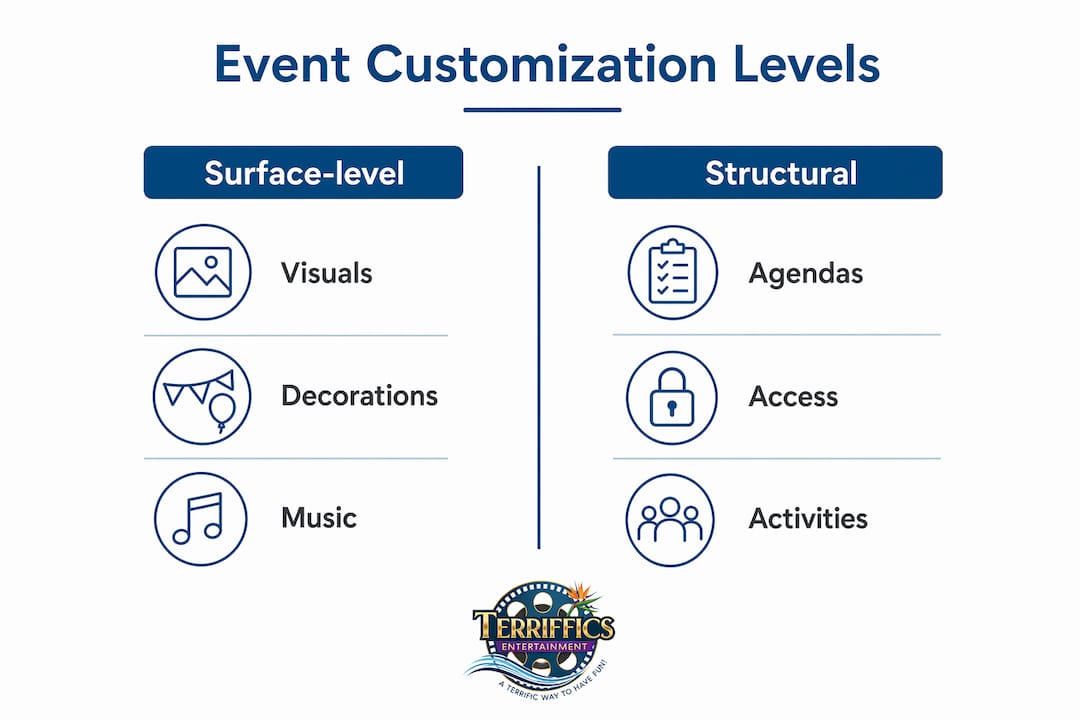
Event personalization strategies fall into two distinct categories: surface-level customization and structural customization. Understanding the difference is what separates events that look personalized from events that actually feel personalized.
Surface-level customization covers cosmetic changes. Branded napkins, themed decorations, custom playlists, and color-coordinated signage all fall here. These touches matter because they signal effort and attention. They set a tone. But they do not fundamentally change what an attendee experiences or learns during the event.
Structural customization changes the actual experience. It includes personalized agendas, role-based session access, tailored networking matches, and communications that reference an attendee’s specific goals. Registration is the highest-leverage touchpoint because all downstream content and communications rely on data collected at that stage. Without structural personalization, you are decorating a generic experience rather than building a personal one.
Feature | Surface-level customization | Structural customization |
What it changes | Visual and aesthetic elements | Attendee journey and content access |
Examples | Branded decor, custom playlists, themed menus | Personalized agendas, role-based sessions, tailored networking |
Effort required | Low to moderate | Moderate to high |
Impact on memory | Moderate | High |
Return on experience | Incremental | Significant |
Structural personalization drives higher return on experience because it changes what people do, not just what they see. The investment is higher, but so is the payoff in satisfaction and loyalty.
Pro Tip: Build your structural customization plan before you design any surface-level elements. Data collected at registration shapes everything downstream, so locking in your data fields early prevents gaps later.
How has technology shaped modern event customization strategies?
Technology has made structural personalization scalable. What once required a large staff and weeks of manual work now runs through AI-powered platforms that adjust attendee journeys in real time.
The key capabilities that technology brings to event personalization include:
Dynamic session recommendations: AI algorithms analyze attendee profiles and behavior to suggest sessions, speakers, or activities that match individual interests.
Real-time content adjustments: Organizers can shift programming, push targeted notifications, or update session access based on live attendance data.
AI-powered matchmaking: Networking tools use attendee goals and backgrounds to connect people who are most likely to benefit from meeting each other.
Progressive profiling: Instead of asking attendees to fill out long forms upfront, platforms collect data gradually across multiple touchpoints, reducing friction while building richer profiles over time.
Automated personalized communications: Pre-event emails, reminders, and post-event follow-ups are triggered and customized based on each attendee’s registration data and behavior.
AI-powered algorithms adjust attendee journeys in real time, helping events feel personal regardless of size. That scalability is the real breakthrough. A 50-person birthday celebration and a 5,000-person corporate conference can both deliver genuinely personal experiences when the right tools are in place. Terrifficsentertainment applies this same principle with its AI-powered photobooth, which adapts the experience to each guest in real time.
What practical steps can event planners take to implement customization?
Effective event personalization starts with data and ends with documentation. The steps below apply to both personal celebrations and corporate gatherings.
Define your attendee segments. Before you build anything, identify who is coming and what they care about. Segments might be role-based for corporate events or relationship-based for personal ones.
Design your registration form around data you will actually use. Every field should feed a downstream decision. Ask about dietary needs, session interests, goals, or preferences. Avoid collecting data you have no plan to act on.
Map personalized touchpoints across the full event timeline. Pre-event communications, arrival experience, session access, food and beverage options, and post-event follow-up are all opportunities for personalization.
Prioritize small, high-impact touches. Personalized welcome notes or tailored dietary options often have higher impact and memorability than large-scale production elements. A handwritten name card costs almost nothing and lands differently than a generic printed program.
Set up your tracking plan before the event build begins. Documenting data parameters before the event build is what makes downstream automation reliable. Without a tracking plan, you cannot measure what worked or replicate it next time.
Measure and debrief. Collect satisfaction data immediately after the event. Compare results across attendee segments to identify which personalization touches drove the strongest response.
Structured data capture during registration enables automation and effective delivery of tailored content throughout the event. Planners who skip this step find themselves manually managing personalization at scale, which is both inefficient and inconsistent.
Pro Tip: Evaluate your event plan from the guest’s perspective before finalizing it. Walk through the full attendee journey as if you were a first-time guest. You will spot gaps in the personalization experience that are invisible from the planner’s side.
What are the benefits of event customization for personal versus corporate events?
The purpose of tailoring an event differs depending on the context, but the core benefit is the same: attendees feel the event was made for them.
For personal celebrations like weddings, graduations, and birthdays, customization is primarily emotional. A playlist built around the guest of honor’s favorite songs, a photo display that tells their story, or a dessert table that reflects their personality creates a sense of being truly celebrated. These touches generate the kind of memories that guests talk about for years. The psychological principles of recognition and belonging apply just as powerfully at a backyard graduation party as they do at a formal gala.
For corporate gatherings, the benefits are both emotional and strategic. Personalization increases event attendance, duration, and participation through relevant experiences, leading to better lead quality, brand loyalty, and measurable ROI. A sales conference that delivers role-specific content to marketing managers versus account executives outperforms one that delivers the same session to everyone. Flexible entertainment packages that match the company’s culture also drive stronger team engagement. Terrifficsentertainment’s corporate event entertainment options are built around this principle.
Event type | Primary customization goal | Key tactics | Measurable outcome |
Personal celebrations | Emotional connection and memory | Personalized decor, curated music, tailored menus | Guest satisfaction, social sharing |
Corporate gatherings | Engagement and brand loyalty | Role-based sessions, personalized agendas, targeted networking | Attendance duration, lead quality, ROI |
The tactics differ, but the underlying logic is identical. People respond to events that feel built for them specifically.
Key takeaways
Event customization works because personalized experiences trigger recognition, create lasting memories, and drive measurable loyalty across both personal and corporate events.
Point | Details |
Personalization drives loyalty | Tailored experiences create stronger emotional associations that lead to repeat attendance and positive referrals. |
Structural beats surface-level | Changing the attendee journey through data-driven personalization delivers higher return on experience than cosmetic changes alone. |
Registration is the foundation | Data collected at registration powers every downstream personalization decision, so design those fields carefully. |
Small touches have big impact | Personalized welcome notes and tailored options often outperform expensive production elements in guest memory. |
Technology scales personalization | AI-powered tools adjust attendee journeys in real time, making deep personalization achievable at any event size. |
Why personalization is no longer optional
We have worked with event planners across Oahu, and the shift we have seen over the past few years is real. Personalization used to be a nice bonus. Now it is the baseline expectation. Guests notice when an event feels generic, and they remember it negatively.
The most common misconception we hear is that personalization requires a big budget. It does not. A thoughtfully curated playlist, a welcome sign with guests’ names, or a photo booth that lets people create their own keepsake costs far less than a production upgrade but lands far harder in memory. The assumption that personalization requires large budgets is the single biggest reason planners underinvest in it.
What we see working consistently is a combination of intentional data collection and a few well-placed personal touches. You do not need to personalize everything. You need to personalize the moments that matter most: arrival, the peak experience, and the farewell. Get those three right and guests leave feeling like the event was made for them.
The future of event personalization is moving toward greater attendee agency. Guests will increasingly choose their own session paths, networking matches, and even entertainment formats. AI will handle the logistics of those choices in real time. Planners who build flexible, data-informed events now will be well ahead when that shift fully arrives.
— Terriffics
Personalized event experiences with Terrifficsentertainment
Planning an event on Oahu and want every guest to walk away with something personal? Terrifficsentertainment builds customizable entertainment packages designed to fit your event’s exact vibe, size, and guest list.
Our AI-powered photobooth rental is one of the most popular ways to add a personalized touch to any celebration or corporate gathering. Guests create their own keepsakes with custom overlays, branded prints, and real-time sharing options. We offer flexible bundle options that mix and match DJ sound, lighting, karaoke, and photobooth services to match your event perfectly. Fast setup, friendly service, and zero stress. Get a quote today and see how easy personalized entertainment can be.
FAQ
What is the main purpose of event customization?
Event customization tailors the attendee experience to individual preferences, making guests feel recognized and valued. This drives stronger emotional connections, higher satisfaction, and greater loyalty to the host or brand.
How does personalization differ from standard event planning?
Standard event planning creates one experience for all attendees. Personalization uses attendee data to adjust content, communications, and interactions so each guest’s experience feels relevant to them specifically.
Do small events benefit from customization as much as large ones?
Yes. Psychological principles of recognition and belonging apply at any event size. Small, thoughtful touches like personalized name cards or curated playlists often create stronger memories than large-scale production elements.
What data should event planners collect to enable personalization?
Registration is the highest-leverage data collection point. Planners should capture dietary needs, session interests, professional roles, and attendee goals so that downstream content and communications can be tailored effectively.
How does AI support event personalization?
AI-powered tools analyze attendee profiles and real-time behavior to deliver dynamic session recommendations, personalized networking matches, and automated communications, making deep personalization scalable across events of any size.
Recommended
Comments