
_edited.png)

What Is Event Management: A Practical Guide


Event management is defined as the end-to-end process of planning, organizing, executing, and evaluating an event to meet specific goals. It covers everything from the first concept meeting to the final post-event report. The industry term is “event management,” and it goes well beyond basic event planning. Where planning focuses on logistics, event management applies project management principles across the full lifecycle of an event, including stakeholder relations, budget control, and measurable outcomes. Whether you are organizing a corporate conference, a wedding, or a community celebration, understanding this process is what separates a stressful experience from a successful one.
What is event management and how does it work?
Event management is a structured discipline, not a single task. It treats every event as a project with defined phases, deliverables, and success metrics. The role of an event manager covers far more than booking a venue. Event managers handle logistics, stakeholder relations, strategic alignment, and post-event analysis, making their work closer to project management than party planning.
The clearest way to understand the event management process is to see it as four connected phases: concept development, planning, execution, and post-event evaluation. Each phase builds on the last. Skipping or rushing any one of them creates problems that compound on the day of the event.
Event management also differs from event planning in scope and accountability. A planner may focus on a checklist of tasks. A manager owns the outcome. That distinction matters most when something goes wrong, because the manager is the one who has already built a contingency plan.
What are the main phases of the event management process?
The event management process follows a clear sequence. Each phase has specific tasks and decisions that shape everything that comes after.
1. Concept development
This phase defines the event’s purpose, audience, and goals. You decide what success looks like before spending a single dollar. Locking in the venue and permits early sets the operational boundaries for every creative decision that follows. Experienced planners prioritize this step because it prevents costly changes later.
2. Planning and budgeting
Planning covers vendor selection, scheduling, marketing, and budget allocation. Always include a 10–15% contingency buffer in your event budget for unforeseen expenses. That buffer protects you when a vendor cancels last minute or equipment needs to be replaced. A budget without a buffer is a budget waiting to fail.
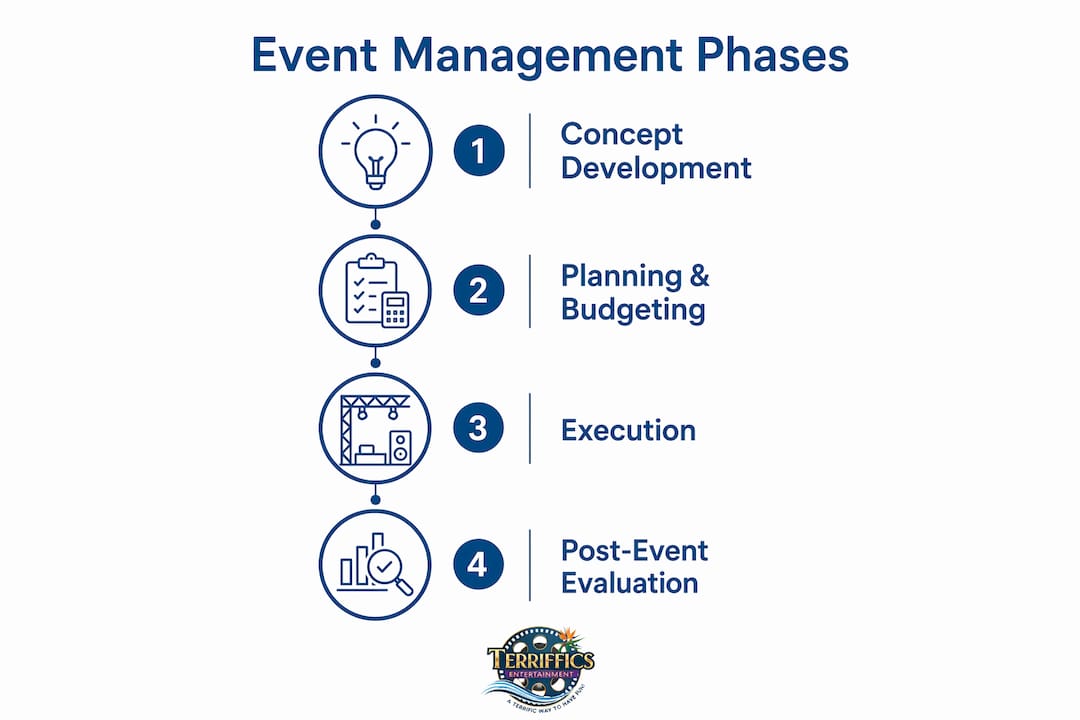
3. Execution
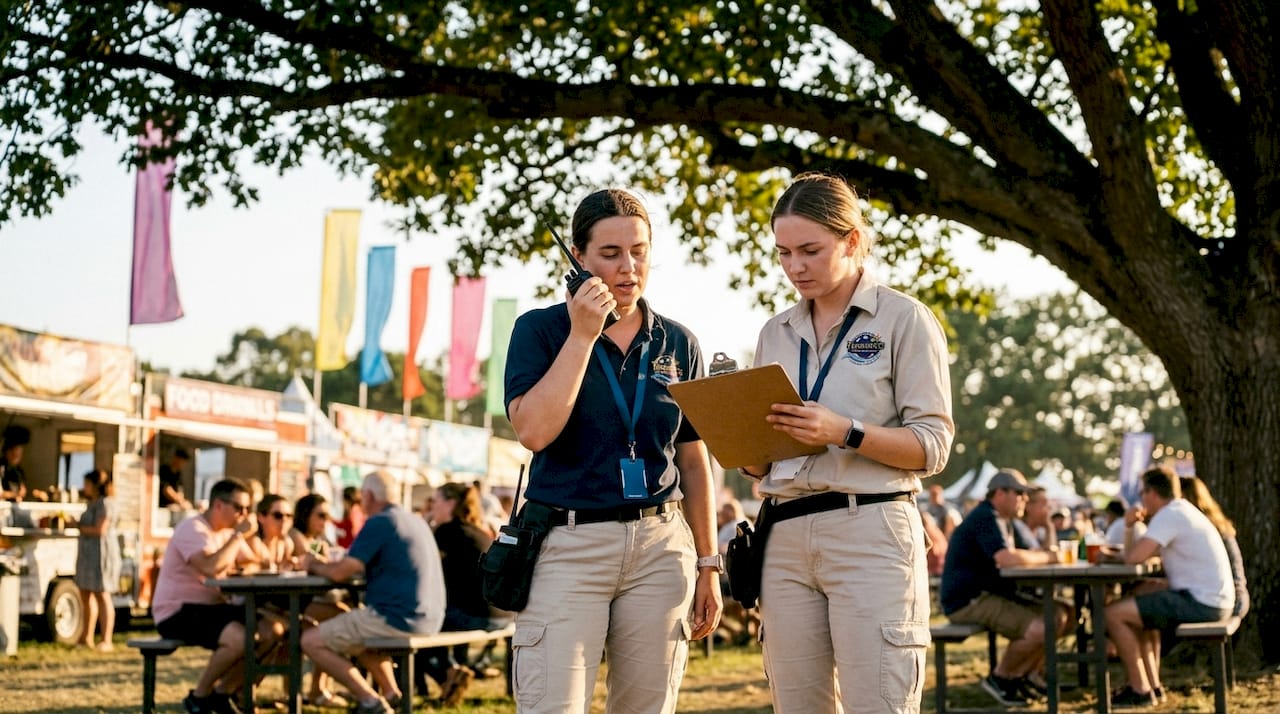
Execution is the live phase. Every decision made in planning either pays off or shows its cracks here. Clear communication protocols are critical. Centralized communication tools create a single source of truth and prevent on-site confusion between staff and vendors. Whether you use Slack for pre-event coordination or walkie-talkies on the day, the protocol must be established in advance.
4. Post-event evaluation
This phase is where most planners cut corners, and it is the phase that builds long-term skill. Post-event analysis covers attendee feedback, budget reconciliation, vendor performance, and ROI reporting. Skipping it means repeating the same mistakes at the next event.
Pro Tip: Build your post-event review into the project timeline before the event happens. Schedule a debrief meeting for 48 hours after the event while details are still fresh.
What skills and tools does successful event management require?
Strong event management requires two types of skills: operational and interpersonal. Both are non-negotiable.
Operational skills include:
Budget management and financial forecasting
Vendor negotiation and contract review
Timeline creation and deadline tracking
Risk assessment and contingency planning
Logistics coordination across multiple teams
Interpersonal skills include:
Clear written and verbal communication
Stakeholder management at every level
Problem-solving under pressure
Team leadership and delegation
The gap between a good event and a great one often comes down to communication. Dedicated communication channels with clear protocols are not optional during live events. They are the difference between a team that responds fast and one that scrambles.
On the tools side, professional event management requires integrated software systems for communication, budget, and schedule management rather than scattered task lists. Project management platforms, shared calendars, and budget tracking tools reduce manual errors and free up mental energy for real-time decisions. You can find a detailed breakdown of how these tools fit together in this event schedule workflow guide.
Pro Tip: Do not manage your event from a spreadsheet alone. Use a dedicated project management tool to assign tasks, set deadlines, and track progress in one place. Your team will thank you.
What types of events require event management?
Every event type has its own planning timeline, stakeholder structure, and budget complexity. Understanding these differences helps you apply the right level of effort in the right areas.
Event type | Typical lead time | Key priorities | Main challenges |
Corporate conference | 3–6 months | Brand alignment, speaker logistics | Stakeholder approvals, AV setup |
Wedding | 12+ months | Personalization, vendor coordination | Timeline precision, family dynamics |
Trade show | 4–6 months | Booth design, attendee traffic | Vendor contracts, floor logistics |
Nonprofit fundraiser | 2–4 months | Donor engagement, budget control | Volunteer coordination, sponsorships |
School or community event | 1–3 months | Safety, accessibility, fun | Permits, limited budget |
Entertainment event | 2–6 months | Guest experience, sound and lighting | Technical setup, crowd management |
Corporate events generally require 3–6 months of lead time, while weddings and complex social events need 12 or more months for reliable vendor availability and planning depth. That timeline difference reflects the number of moving parts, not just the size of the guest list.
Budget complexity also varies sharply. A corporate event often has a defined budget approved by a finance team, with clear ROI expectations. A wedding budget is personal and emotional, which changes how you negotiate and communicate. Knowing your event type shapes every decision you make from day one. For corporate-specific planning, the corporate event entertainment guide covers the unique priorities of that format in detail.
Why does strategic event management matter?
Strategic event management produces measurable outcomes. It is not just about running a smooth event. It is about delivering results that align with a goal, whether that goal is brand awareness, revenue, community connection, or a personal milestone.
Attendee satisfaction and engagement drive event success and brand image. Data-backed decisions improve both. When you survey attendees, track check-in rates, and measure social media engagement, you get real information to improve the next event. Gut feeling is not a strategy.
Risk mitigation is another direct benefit of structured management. Contingency buffers cover last-minute vendor changes or equipment rentals, protecting the event when something unexpected happens. And something unexpected always happens.
“The most successful events are engineered by focusing early on attendee needs and using data-backed decisions to enhance engagement.” — Indeed Career Advice
The business case for professional event management is straightforward. Events that are well-managed protect your budget, your reputation, and your relationships. Events that are poorly managed do the opposite, often publicly.
Key Takeaways
Effective event management is a structured, multi-phase discipline that applies project management principles to deliver events aligned with clear goals and measurable outcomes.
Point | Details |
Event management vs. planning | Management covers the full lifecycle and owns outcomes; planning focuses on task execution. |
Budget contingency is non-negotiable | Always reserve a 10–15% buffer to cover unexpected costs and vendor changes. |
Lead time varies by event type | Corporate events need 3–6 months; weddings and complex events need 12 or more months. |
Communication protocols prevent failure | Centralized tools and clear channels stop on-site confusion before it starts. |
Post-event analysis builds long-term skill | Reviewing feedback, budgets, and ROI after each event improves every future event. |
What I have learned from watching events succeed and fail
After working with event planners and clients across all kinds of celebrations here on Oahu, one pattern stands out clearly. The events that fall apart are almost never underfunded. They are under-communicated.
We have seen beautifully budgeted events stumble because the DJ did not know the venue’s power setup, or the photo booth team arrived without a confirmed contact on-site. Those are communication failures, not creative ones. The fix is simple: one point of contact, one shared timeline, one confirmed setup window. That structure costs nothing and saves everything.
The other thing I would push back on is the idea that event management is primarily a creative skill. Creativity matters, but event management is primarily project management aligned with business goals and measurable ROI. The planners who grow fastest are the ones who treat their events like projects, with phases, owners, and defined success criteria.
Start with the end in mind. Define what a successful event looks like before you book a single vendor. Then build your plan backward from that outcome. That one habit separates the planners who thrive from the ones who just survive.
— Terriffics
How Terrifficsentertainment supports your event planning
Planning an event on Oahu means managing a lot of moving parts. Terrifficsentertainment makes the entertainment side simple. We handle DJ sound and lighting, karaoke, outdoor movie setups, and our AI-powered photobooth rental in Oahu, so you can focus on the bigger picture.
Our packages are flexible and mix-and-match, built for weddings, graduations, corporate events, school gatherings, and community celebrations across the entire island. Fast setup, friendly service, and a team that shows up prepared. You bring the guest list. We bring the good time. See our full gallery to get a feel for what we set up at real events.
FAQ
What is event management in simple terms?
Event management is the process of planning, organizing, and running an event from start to finish. It covers budgeting, vendor coordination, logistics, and post-event review.
What does an event manager do?
An event manager oversees every phase of an event, including concept development, vendor negotiations, on-site execution, and post-event analysis. The role combines project management with stakeholder communication.
How long does event management planning take?
Lead times depend on event type. Corporate events typically need 3–6 months of planning, while weddings and large-scale events require 12 or more months for reliable results.
What are the key components of event management?
The key components are concept development, budgeting, vendor management, logistics, on-site execution, and post-event evaluation. Each component depends on the one before it.
Why is a contingency budget important in event management?
A contingency buffer of 10–15% of the total budget protects against unexpected costs like last-minute vendor changes or equipment rentals. Without it, a single surprise can derail the entire event.
Recommended
This is a helpful and practical guide to Event management. From planning and budgeting to coordinating vendors and ensuring everything runs smoothly, the article covers the key elements needed for successful events. Thanks for sharing these valuable insights—they're useful for both beginners and experienced event professionals.