
_edited.png)

Defining Modern Event Entertainment for Planners


Modern event entertainment is defined as the strategic design of immersive, interactive experiences that actively shape audience emotions rather than simply fill time on a program. This is the industry’s shift from passive performance to what experience designers call “emotional architecture.” 69% of event attendees prefer meaningful, transformative experiences over generic entertainment. That preference is reshaping every category of event, from corporate galas to backyard graduations. The global events industry is projected at $1.46 trillion in 2026 with a 9.4% compound annual growth rate. Those numbers confirm that defining modern event entertainment is not an academic exercise. It is a practical skill that directly affects whether your event succeeds or gets forgotten.
What is modern event entertainment in 2026?
Modern event entertainment is experience design. The older model treated entertainment as a booking: hire a band, fill the 8–10 p.m. slot, done. The newer model treats entertainment as architecture. Every element, from the arrival playlist to the final send-off, is chosen to shape how guests feel at each moment of the event.
The clearest way to understand the difference is this: entertainment answers the question “what will guests watch?” Experience design answers the question “how will guests feel, and what will they remember?” Entertainment is a “what,” while experience design is a “why.” That single distinction changes every decision you make as a planner.
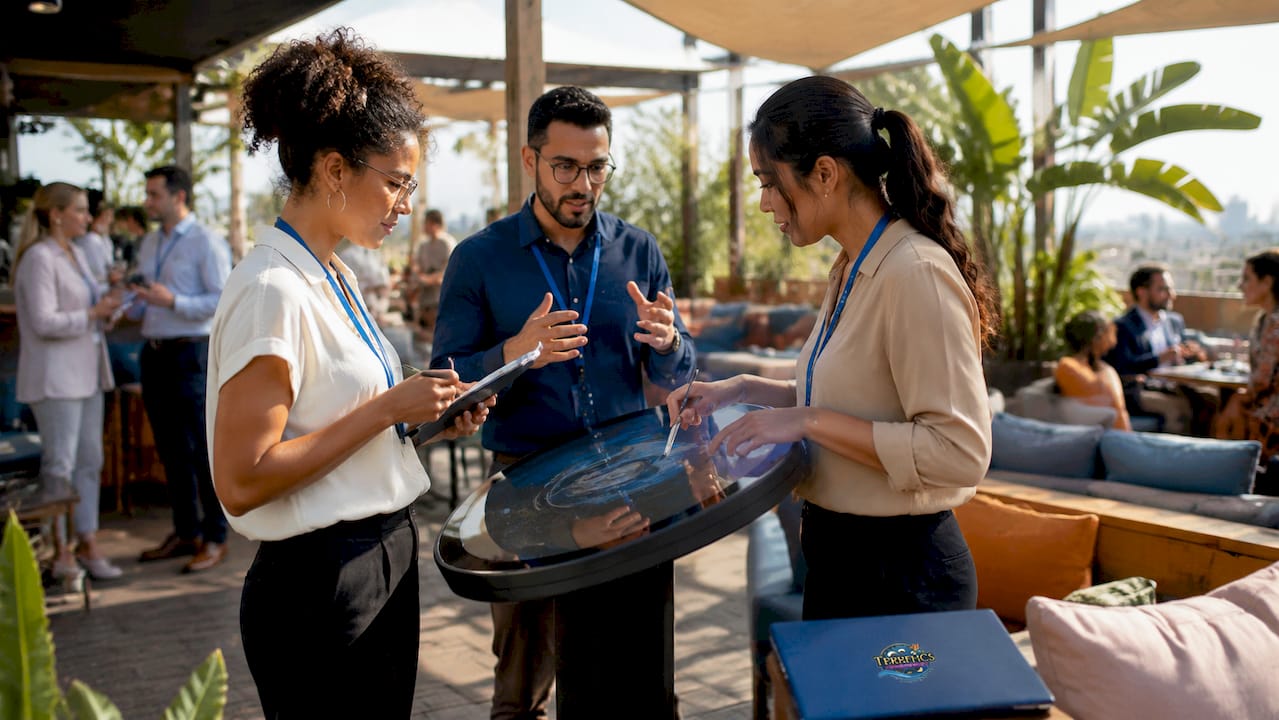
The role of entertainment in special events has expanded well beyond performance. It now includes technology, personalization, pacing, and measurable outcomes. Planners who understand this shift book better vendors, write better briefs, and produce events that guests talk about for months.
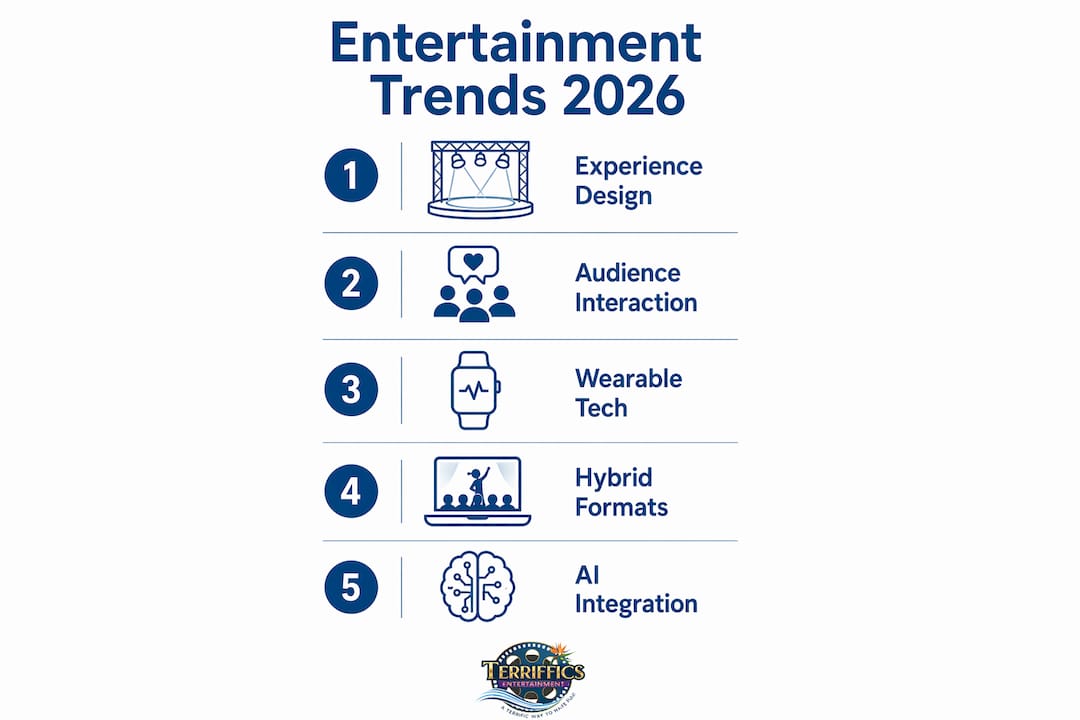
Key trends shaping current event entertainment in 2026
Several forces are converging to define what great event entertainment looks like right now.
Live experience resurgence. Physical scarcity drives real value. Sphere’s revenue increased 69% year over year in Q1 2026, driven entirely by unique in-person experiences you cannot replicate at home. Live Nation stock rose 16% year to date as of june 2026. Guests are willing to pay premium prices for events that feel genuinely exclusive.
Microdrama and vertical storytelling. The microdrama format (1–3 minute vertical episodes) is a fastest-growing entertainment format in 2026, with global revenues estimated at $14 billion by year-end. 82% of microdrama traffic runs through YouTube and TikTok. Event planners are borrowing this format for short, punchy live segments that hold attention in a distracted world.
Immersive tech integration. Holography, mixed reality, augmented reality, and real-time audience polling tools are moving from novelty to standard. These tools shift guests from spectators to participants.
AI-assisted personalization. AI supports personalization through real-time sentiment analysis, predictive setlist optimization, and dynamic lighting synchronized to crowd energy. AI amplifies human artistry rather than replacing performers.
Hybrid and phygital formats. Events now serve both in-room and remote guests simultaneously. The best hybrid entertainment treats both audiences as equal participants, not as primary and secondary viewers.
Pro Tip: When reviewing current event entertainment trends, ask every vendor one question: “How does your service change based on how the crowd responds?” If they cannot answer, they are selling passive entertainment, not experience design.
The shift from broadcast to dialogue is the defining structural change. Traditional entertainment pushed content at audiences. Modern entertainment creates a many-to-many conversation where guests shape the experience in real time through voting, participation, and user-generated content.
How modern event entertainment designs the emotional arc
The most underused concept in event planning is the emotional arc. Most planners think in terms of a schedule. Experience designers think in terms of feelings across time.
A well-designed emotional arc moves guests through four phases:
Arrival and anticipation. The first 15 minutes set the emotional baseline. Ambient sound, lighting temperature, and interactive welcome elements tell guests what kind of night this will be. A DJ who reads the room and builds energy from the first track is doing experience design, not just playing music.
Main event peak. This is the moment of highest emotional intensity. It could be a live performance, a keynote, a first dance, or a group activity. Everything before it builds toward this moment. Everything after it should feel like a satisfying resolution.
Transitions and pacing. Transitions matter as much as main acts. Dead air between segments kills momentum. Short interactive elements, themed lighting shifts, or brief audience participation moments keep energy alive between peaks.
Departure and memory creation. The last 10 minutes of an event are disproportionately powerful. Guests remember how an event ended. A photo moment, a shared activity, or a musical send-off creates the final emotional impression that guests carry home.
Pro Tip: Map your event on a simple graph: time on the horizontal axis, desired energy level on the vertical axis. Then assign every entertainment element to a point on that graph. If you see a flat line or a cliff drop, you have a pacing problem to fix before the event date.
Integrating entertainment with overall event goals also means measuring outcomes beyond applause. Planners who treat entertainment as a measurable asset track metrics like dwell time, social shares, and post-event survey scores. Those numbers justify budgets and improve future events.
Innovative entertainment ideas that embody modern principles
The following formats represent the clearest examples of what modern event entertainment looks like in practice.
Wearable tech gamification
Wearable wristbands that light up in sync with music or respond to audience votes create collective participation. Every guest becomes part of the visual show. This format works especially well for corporate events and large celebrations where you want the crowd to feel unified.
Interactive LED and projection shows
Audience-driven visuals respond to crowd movement, sound levels, or live voting. Guests see their choices reflected in real time on screens or projection surfaces. This format turns passive viewing into active co-creation.
Micro-immersions and sensory pods
5–10 minute distributed thematic experiences maintain attention better than a single long performance. Short, themed activations placed around a venue give guests agency. They choose their own path through the event rather than sitting in assigned seats watching a stage.
Phygital hybrid entertainment
Phygital entertainment integrates remote and in-person guests through shared interactive elements. A live poll that both audiences vote on simultaneously, or a photo activity that merges in-room and virtual submissions, creates genuine inclusion rather than a two-tier experience.
AI-powered photobooths and UGC platforms
An AI-powered photobooth does more than print photos. It captures user-generated content, feeds social sharing, and integrates with CRM systems to create measurable marketing data from a single guest interaction. Terrifficsentertainment’s AI-powered photobooth is a direct example of this format in action at Oahu events.
Format | Primary benefit | Best event type |
Wearable tech gamification | Collective participation | Corporate, large celebrations |
Interactive LED/projection | Real-time co-creation | Weddings, galas |
Micro-immersions | Sustained attention | Conferences, receptions |
Phygital hybrid | Inclusive remote engagement | Corporate, community events |
AI-powered photobooth | UGC and social sharing | Any event type |
Practical steps for planners to implement modern entertainment
Adopting the modern entertainment mindset requires a shift in how you plan, brief, and measure.
Start with objectives, not acts. Define what you want guests to feel and do before you book any vendor. A graduation party that wants guests to feel proud and connected needs different entertainment than a corporate event designed to generate leads.
Write vendor-ready specs. Give every entertainment vendor a one-page brief that includes your event goals, audience profile, emotional arc targets, and KPIs. Vendors who can respond to a brief like that are experience designers. Vendors who cannot are time fillers.
Build in interactive and immersive elements early. Interactive entertainment options like live polling, karaoke, and participatory photo experiences require technical setup. Book them early and include them in your run-of-show from the start, not as afterthoughts.
Balance technology with human artistry. Technology serves the experience. A DJ with great instincts and a well-calibrated sound system will outperform a fully automated playlist every time. AI amplifies human performance through real-time analytics and dynamic adjustments, but the human element remains the core.
Avoid the generic act trap. Booking a cover band because “everyone likes music” is the entertainment equivalent of serving plain white rice. It fills time without creating memory. Choose acts and formats that connect directly to your audience’s specific preferences and your event’s specific goals.
Pro Tip: Review Oahu event trends before finalizing your entertainment lineup. Local context matters. What works at a mainland corporate event may land differently with an Oahu audience that expects warmth, community, and a touch of aloha.
Flexible entertainment packages also give planners room to adapt. Events rarely go exactly as planned. A vendor who can adjust their format, timing, or energy level on the fly is worth more than a rigid act with a perfect demo reel.
My honest take on where event entertainment is heading
We have seen a real change in what guests expect from events, and it happened faster than most planners anticipated. Three years ago, a good DJ and a nice venue were enough to get strong reviews. Now, guests arrive with a higher bar. They have experienced immersive pop-ups, interactive brand activations, and AI-driven personalization in their daily lives. They bring those expectations to every event we produce.
The planners who struggle are the ones who still think of entertainment as a line item. They allocate a budget, book an act, and move on. The planners who consistently produce memorable events treat entertainment as the primary vehicle for their event’s message. They ask what they want guests to feel, not just what they want guests to see.
The most important shift is measuring impact beyond applause. Applause is a feeling. Social shares, dwell time, post-event survey scores, and CRM data are facts. When you can show a client that their event generated 400 social posts and a 92% satisfaction score, you have turned entertainment into a business asset. That is the conversation that gets budgets approved and clients retained.
We are also watching the line between physical and digital entertainment blur in ways that create real opportunity for planners. Livestreaming for events is no longer a backup plan for people who could not attend. It is a primary channel that expands your audience and extends the life of your event content. The planners who treat hybrid as a first-class format, not an afterthought, will have a significant advantage in the next few years.
The spirit of aloha that drives everything we do at Terrifficsentertainment is actually a perfect model for modern event entertainment. It is warm, personal, and focused entirely on making guests feel genuinely welcomed and celebrated. That human quality is what no algorithm can replace.
— Terriffics
How Terrifficsentertainment brings modern entertainment to your event
Terrifficsentertainment serves the entire island of Oahu with entertainment that reflects exactly what this article describes: personalized, interactive, and designed to create real memories.
Our services include DJ sound and lighting, karaoke, outdoor movie setups, and an AI-powered photobooth rental that captures guest moments and drives social sharing at weddings, graduations, corporate events, and community gatherings. Every package is mix-and-match, so you build the experience your event actually needs. Fast setup, friendly service, and a team that genuinely cares about your celebration. That is the Terrifficsentertainment difference. Reach out to get a custom quote and see how we can make your next event unforgettable.
Key takeaways
Modern event entertainment succeeds when planners treat every element, from arrival music to the final photo moment, as part of a designed emotional arc with measurable outcomes.
Point | Details |
Experience design over booking | Define how guests should feel before choosing any entertainment format or vendor. |
Emotional arc planning | Map energy levels across all four event phases: arrival, peak, transitions, and departure. |
Interactive formats drive memory | Micro-immersions, AI photobooths, and live polling create participation that guests remember. |
Technology amplifies humans | AI and immersive tech work best when they support skilled performers, not replace them. |
Measure beyond applause | Track social shares, dwell time, and survey scores to prove entertainment ROI to clients. |
FAQ
What is modern event entertainment?
Modern event entertainment is the strategic design of immersive, interactive experiences that shape audience emotions across an entire event. It moves beyond booking acts to designing a full emotional arc with measurable outcomes.
How does experience design differ from traditional entertainment?
Traditional entertainment fills time slots with passive performances. Experience design treats every element as part of a deliberate emotional narrative, where transitions, technology, and audience participation are as important as the main act.
What are the most effective interactive entertainment options in 2026?
AI-powered photobooths, live audience polling, wearable tech gamification, and micro-immersion activations are the most effective formats. Each creates active guest participation rather than passive viewing.
How does livestreaming for events fit into modern entertainment?
Livestreaming for events is now a primary channel, not a backup. Hybrid formats that treat remote and in-person guests equally expand your audience and extend the life of your event content well beyond the event date.
How do I measure the success of modern event entertainment?
Track social shares, post-event survey scores, dwell time, and CRM data from interactive elements. These metrics convert entertainment from a cost line into a measurable marketing asset with clear business value.
Recommended
Comments