
_edited.png)

Private Party Planning Steps: Your 2026 Celebration Guide

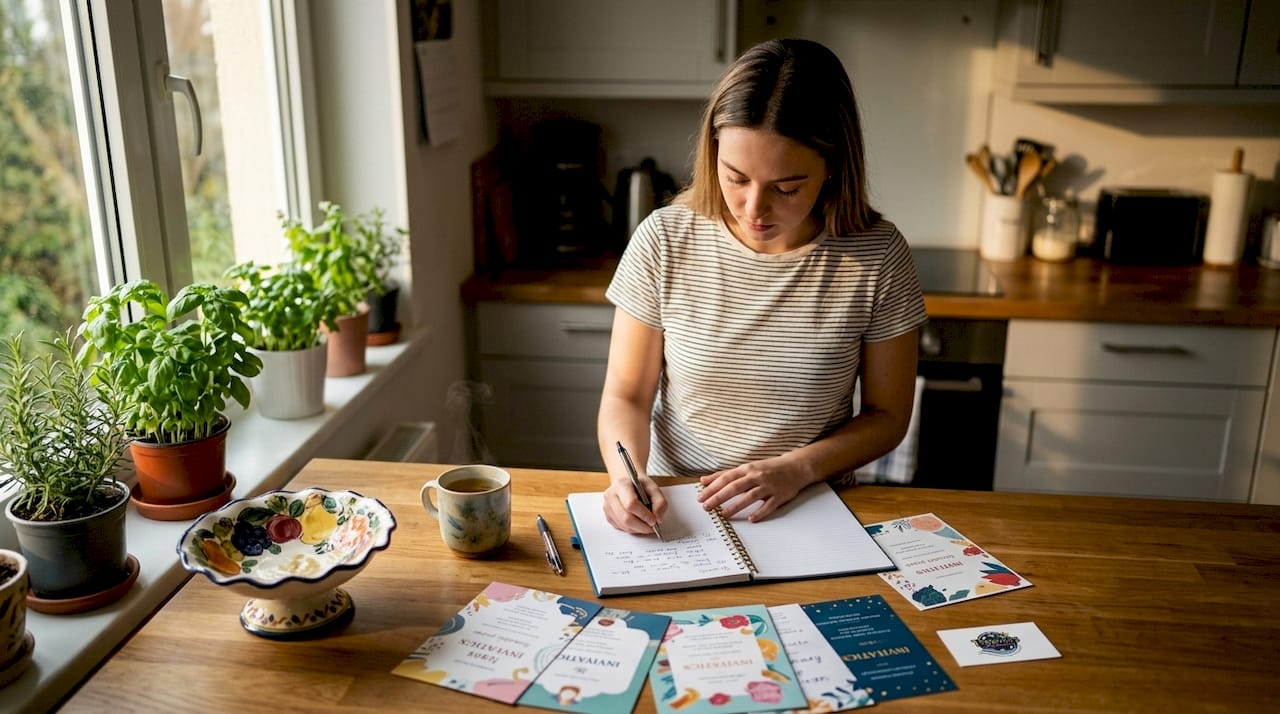
Private party planning steps are the sequential actions you take to organize a personal celebration from the first idea to the final cleanup. Skipping steps creates gaps. Gaps create stress. Following a clear process is what separates a forgettable gathering from a party people talk about for years. Whether you are planning a birthday bash in Kapolei, a graduation party on Oahu, or a backyard wedding reception, the same core steps apply. This guide walks you through every stage, with real timelines, budgeting rules, and day-of tips that actually work.
What are the core private party planning steps?
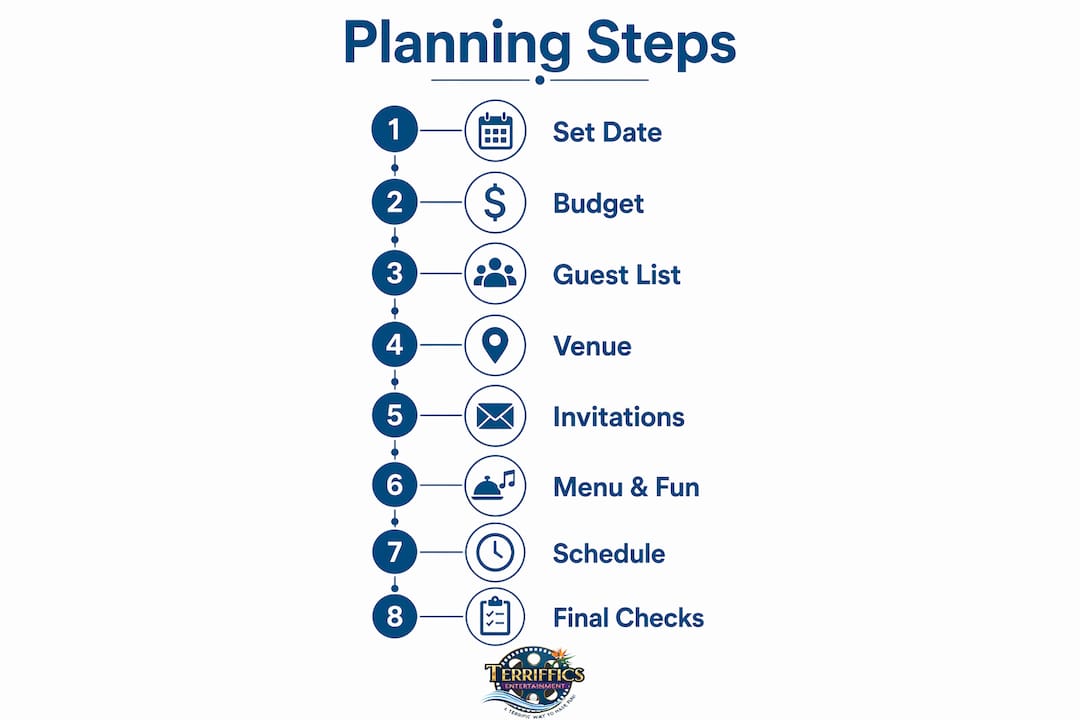
The most important thing to understand about private party planning steps is that order matters. You cannot book a caterer before you know your guest count. You cannot send invitations before you have a venue. Each decision feeds the next, and a timeline-driven checklist reduces last-minute stress and prevents costly oversights like double-booking vendors.
The standard industry term for this process is event management, and it applies whether you are hosting 15 people or 150. The private party version is simpler than a corporate conference, but the structure is the same. Think of it as a dependency chain. Lock down the big decisions first, then fill in the details.
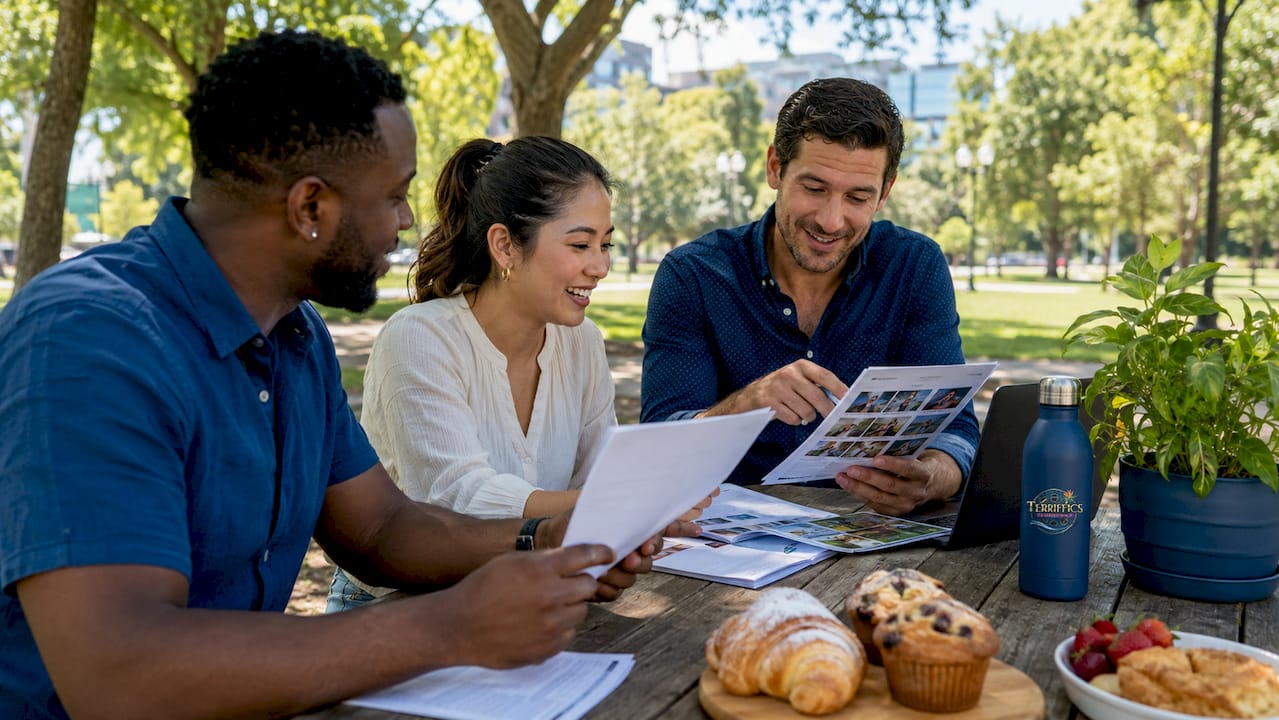
How do you set your date, budget, and guest list?
These three decisions form the foundation of your entire plan. Get them wrong and every step after becomes harder.
Choosing your date
Small to medium parties need at least 4–6 weeks of lead time for date, budget, and guest decisions. Larger events, especially those requiring weekend venue bookings or catering, need 8–12 weeks. Booking too late means your first-choice venue is gone and your vendors are already committed elsewhere.
Pick a date that works for your most important guests first. Then check it against local events, holidays, and school calendars. A graduation party scheduled the same weekend as a major community festival on Oahu will compete for vendor availability and guest attention.
Building a realistic budget
Allocate 35–40% of your total budget to food and drinks. That is your largest single expense. Décor, entertainment, and rentals split the remainder. Always hold back a 10–15% contingency reserve for costs you did not see coming.
Realistic budgeting done early prevents running out of money for venue and catering after spending on decorations. That is a real and common mistake. Set your total number first, then work backward to each category.
Pro Tip: Ask every vendor for an itemized quote. Hidden fees from service charges, gratuities, equipment rentals, and overtime can add 20% or more to a quote that looked affordable at first glance.
Managing your guest list
Write your guest list before you do anything else. The number of guests determines your venue size, food quantities, and total budget. Be honest about who will actually show up.
Start with a “must invite” list, then add a secondary list
Confirm your venue capacity before finalizing numbers
Build in a realistic no-show buffer from the start
Plan for 10–20% non-attendance when calculating food and seating. RSVPs are not final counts. People confirm and then cancel. Planning for your full RSVP count leads to wasted food and money.
How do you select the right venue for a private event?
Venue selection is the single decision that locks in the most other variables. Your venue determines your date options, your guest capacity, your catering choices, and your setup timeline. Book the venue before booking vendors and before sending invitations. Everything else follows from this.
Factor | Home Hosting | External Venue |
Cost | Lower upfront cost | Rental fee, but often includes tables and chairs |
Capacity | Limited by space and parking | Defined capacity with room for growth |
Setup control | Full control over layout and timing | Subject to venue rules and time windows |
Cleanup | Your responsibility entirely | Often partially managed by venue staff |
Permits | May need noise or gathering permits | Venue typically handles licensing |
Before signing any venue contract, ask these questions directly:
What is included in the rental fee (tables, chairs, AV equipment)?
What is the cancellation and refund policy?
Are outside vendors and caterers allowed?
What is the setup and teardown window?
Is there a noise curfew or parking limit?
Pro Tip: Visit the venue in person at the same time of day as your event. Lighting, noise levels, and parking availability change significantly between morning and evening.
For additional logistics, think about transportation for guests, rentals you will need (linens, lighting, a sound system), and whether you need a permit for outdoor gatherings. Oahu has specific rules for public spaces, so confirm early.
What are best practices for sending invitations and managing RSVPs?
Invitations set the tone for your event before guests arrive. They also give you the data you need to plan food, seating, and activities.
Send invitations at the right time. Large or formal events need invitations 6–8 weeks out. Casual gatherings work fine with 2–3 weeks of notice. Sending too early means guests forget. Sending too late means scheduling conflicts.
Include clear RSVP instructions. Specify the deadline, the method (text, email, online form), and whether you need a meal preference or plus-one count. Vague RSVP requests produce vague responses.
Choose your format based on your event. Digital invitations through tools like Evite or Paperless Post work well for casual parties and reduce cost. Printed invitations signal formality and are worth the investment for weddings or milestone birthdays.
Follow up before the deadline. Send a reminder one week before the RSVP cutoff. A short, friendly message lifts your response rate significantly.
Convert RSVPs to a working attendance number. Apply a 10–20% no-show buffer to your confirmed RSVP count. That adjusted number is what you use to order food, arrange seating, and plan activities.
Do not rely solely on RSVPs for planning. People confirm and cancel for reasons outside your control. The no-show buffer is not pessimism. It is accuracy.
How do you plan your menu, entertainment, and party day timeline?
This section is where your party takes shape. Food, fun, and timing all connect here.
Planning your menu
Use your adjusted attendance number (RSVPs minus the no-show buffer) to calculate food quantities. Overordering wastes money. Underordering creates an awkward situation.
Plan for a full meal if your event runs longer than 3 hours
Offer at least one vegetarian option and one gluten-free option
Account for dietary restrictions in your RSVP form
For drinks, estimate 2–3 beverages per guest per hour for non-alcoholic options
A buffet-style setup works well for groups of 30 or more. It reduces per-head catering costs and gives guests flexibility. For smaller gatherings, a plated or family-style meal feels more personal.
Choosing entertainment
Entertainment choice depends on your guest mix and event type. A kids’ birthday party needs different energy than a graduation celebration for adults. For a private party on Oahu, popular options include DJ sound and lighting, karaoke, an AI-powered photobooth, and outdoor movie setups.
Pro Tip: Book entertainment at the same time as your venue. Popular DJ and photobooth providers on Oahu fill up fast, especially for weekend dates in spring and summer.
Match entertainment to your timeline. A photobooth works best during cocktail hour or after dinner when guests are mingling. Karaoke needs a dedicated block of time with a host or MC to keep energy up.
Building your run-of-show schedule
Treat your party day schedule as a dependency chain. Every activity connects to the one before it. Vendor arrivals, food service, entertainment, and cleanup all need precise timing.
A sample run-of-show for a 4-hour birthday party might look like this:
2:00 PM: Venue opens, vendors begin setup
3:00 PM: Guests arrive, photobooth opens
3:30 PM: Food service begins
5:00 PM: Cake and toasts
5:30 PM: Open dancing or karaoke
6:30 PM: Guests depart, cleanup begins
Share this schedule with every vendor at least one week before the event. A detailed run-of-show prevents confusion and keeps the event moving without you having to manage every moment personally.
Key takeaways
Successful private party planning requires locking in your date, budget, and guest count first, then building every other decision on that foundation.
Point | Details |
Start with the big three | Set your date, budget, and guest list before booking anything else. |
Hold a contingency reserve | Keep 10–15% of your budget unspent until the week of the event. |
Book venue before vendors | Venue availability determines your date and vendor options. |
Apply a no-show buffer | Expect 10–20% fewer guests than your confirmed RSVP count. |
Build a run-of-show | Share a minute-by-minute schedule with every vendor at least one week out. |
What I have learned from planning hundreds of celebrations
After working with families across Oahu on birthdays, graduations, and weddings, the pattern is clear. The parties that go wrong almost always share one of two problems: the budget was set too loosely, or the timeline was built too tightly.
Loose budgets feel freeing at the start. Then the vendor quotes come in and the contingency fund disappears before the food is ordered. The fix is simple. Set a firm total number, allocate by category, and treat the contingency as untouchable until the final week.
Tight timelines are the other trap. Planners schedule vendor arrivals back to back with no buffer. One late delivery and the whole day shifts. Build 15-minute gaps between every major transition. That buffer is invisible when things go right and lifts enormous stress when something goes sideways.
The best private event planning guide is the one you actually follow. A checklist sitting in a drawer does nothing. Print it, share it with anyone helping you, and check it daily in the final two weeks. Delegation matters too. You cannot run the party and manage every vendor at the same time. Assign one trusted person to be your day-of point of contact for vendors.
Flexibility is not a weakness in event planning. It is a skill. The guests who remember your party are not thinking about the timeline. They are thinking about how it felt.
— Terriffics
How Terrifficsentertainment makes your party planning easier
Planning a private party is a lot to manage. Terrifficsentertainment handles the entertainment side so you can focus on your guests.
We serve the entire island of Oahu with DJ sound and lighting, an AI-powered photobooth rental, karaoke, and outdoor movie setups. Our packages are flexible and mix-and-match, so you only pay for what your event actually needs. Fast setup and teardown means we are in and out without disrupting your timeline. Whether you are planning a graduation party in Pearl City or a birthday celebration in Kapolei, we bring the fun and the professionalism. Check out our DJ, photobooth, and karaoke options and get a quote for your date today.
FAQ
How far in advance should I start planning a private party?
Small to medium private parties need 4–6 weeks of lead time. Larger events with catering and weekend venue bookings need 8–12 weeks.
What percentage of my budget should go to food and drinks?
Allocate 35–40% of your total budget to food and drinks, and reserve an additional 10–15% as a contingency buffer for unexpected costs.
How do I estimate how many guests will actually show up?
Apply a 10–20% no-show buffer to your confirmed RSVP count. That adjusted number is what you use for food orders, seating, and activity planning.
When should I send out party invitations?
Send invitations 6–8 weeks ahead for large or formal events. For casual gatherings, 2–3 weeks is enough notice for most guests.
What entertainment works best for a private party on Oahu?
DJ sound and lighting, karaoke, and AI-powered photobooths are popular choices for private celebrations on Oahu. The right option depends on your guest mix, venue size, and event type. You can find a full party rental planning guide to help match entertainment to your specific event.
Recommended
Comments